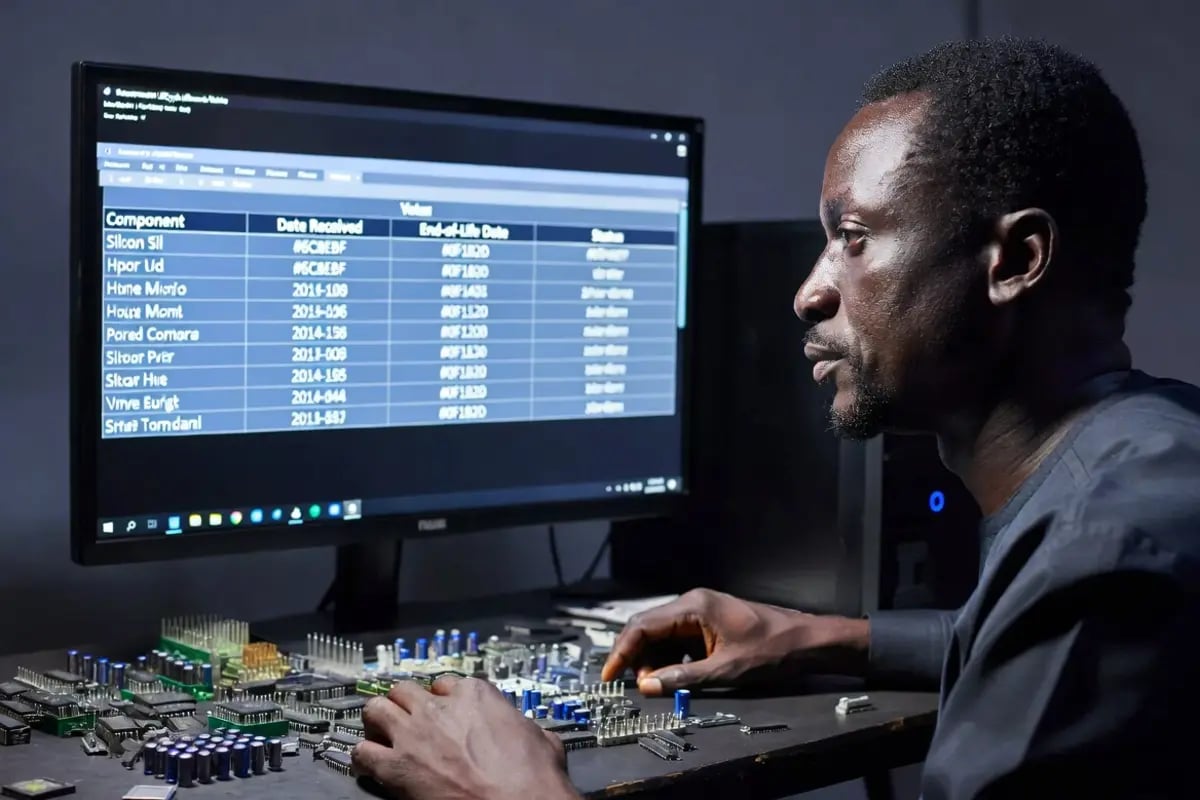
Obsolescence Management
Proactive obsolescence screening and lifecycle management for electronic components, supporting institutional buyers in maintaining continuity when parts reach end-of-life or become scarce.
Obsolescence management is what keeps a discontinued part from halting an entire production line — the structured discipline of tracking when electronic components reach end-of-life (EOL), are pulled from authorised distribution, or become scarce, and acting before the shortage materialises. (To be clear: Kronix Silicon is a sourcing and supply-chain partner, not a semiconductor fab.) We have run this discipline for institutional buyers since 1998. Request a sourcing quote — or discuss a supply programme: +233 20 531 3333.
What is Obsolescence Management?
Obsolescence management is the structured discipline of monitoring, anticipating and mitigating supply disruptions that arise when electronic components reach end-of-life, are discontinued by manufacturers, or transition into scarcity across global distribution channels. For institutional buyers — electronics manufacturers, telecoms operators, industrial automation facilities, energy infrastructure organisations and government procurement offices — a single discontinued component can halt an entire production line, delay a critical system upgrade, or compromise an operational platform that was designed for decades of service.
Kronix Silicon’s obsolescence management service provides a proactive, documentation-led framework that identifies lifecycle risk before it becomes a sourcing crisis. Rather than responding to shortages after they materialise, the service embeds continuous monitoring, structured lifecycle intelligence and managed last-time-buy advisory into a client’s procurement cycle — ensuring component continuity is planned, not improvised.
When to Specify Obsolescence Management
Obsolescence management is most critical for institutions maintaining long-lifecycle systems where the original bill of materials was fixed at design-time and cannot be easily substituted. Telecoms infrastructure operators running legacy network equipment, industrial automation facilities with PLCs and embedded controllers commissioned years prior, energy sector organisations maintaining generation and distribution control systems, and government operations managing sovereign technology assets — all face the same exposure: the world’s component landscape changes faster than institutional refresh cycles.
The service is equally relevant at the point of new system specification. Procurement teams commissioning equipment across Ghana and Togo benefit from lifecycle screening at the design stage, ensuring that components selected today carry forward realistic support horizons and that last-time-buy windows are identified and acted upon before market availability closes.
Methodology — The Kronix Silicon Specialist Approach
-
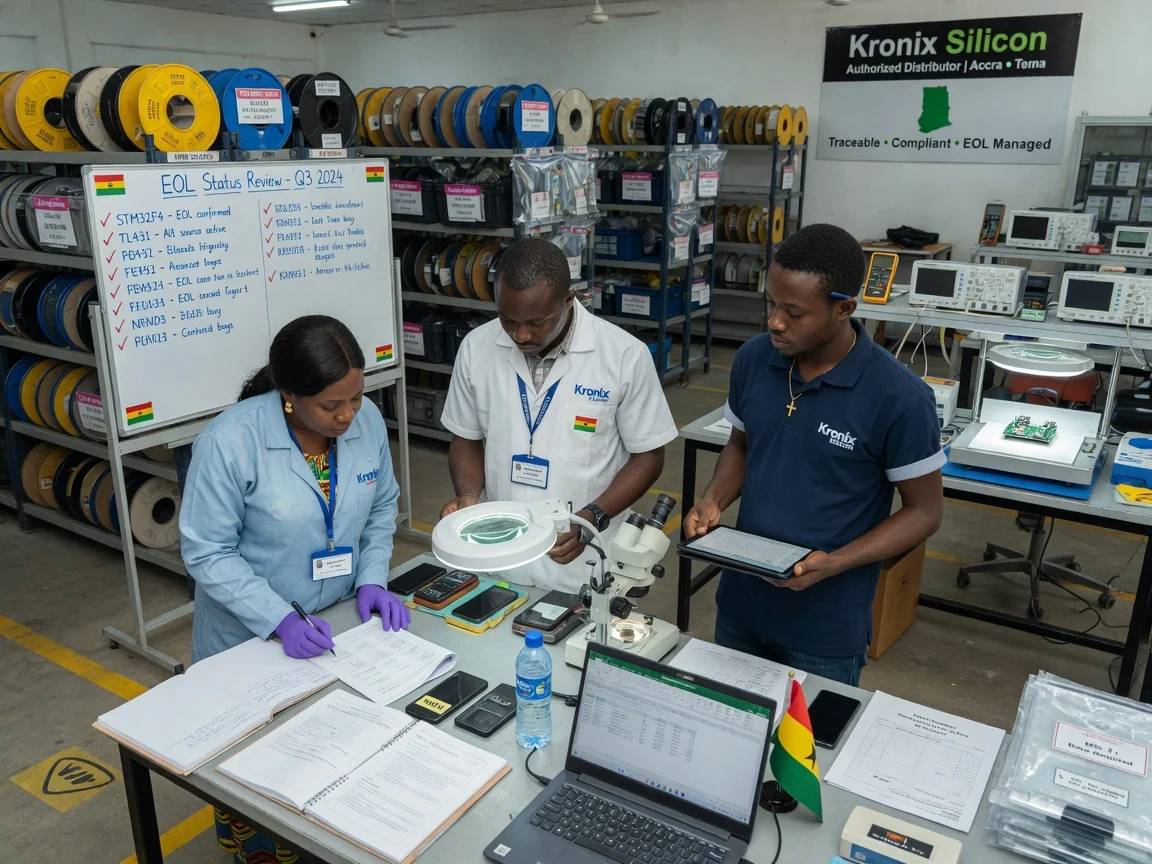
Bill of Materials Lifecycle Audit — The engagement begins with a structured review of the client’s existing bill of materials or component register. Each part number is cross-referenced against manufacturer lifecycle status databases, cross-referencing active, end-of-life, last-time-buy, and discontinued classifications.
-
Risk Stratification — Components are stratified by criticality and replacement complexity. High-risk, long-lead or single-source parts are flagged for priority action; lower-risk items are scheduled for standard monitoring intervals.
-
Sourcing Pathway Analysis — For each at-risk component, Kronix Silicon maps available sourcing pathways — authorised stock positions, verified distributor inventory, and form-fit-function alternative identification where applicable — all traceable and documented.
-
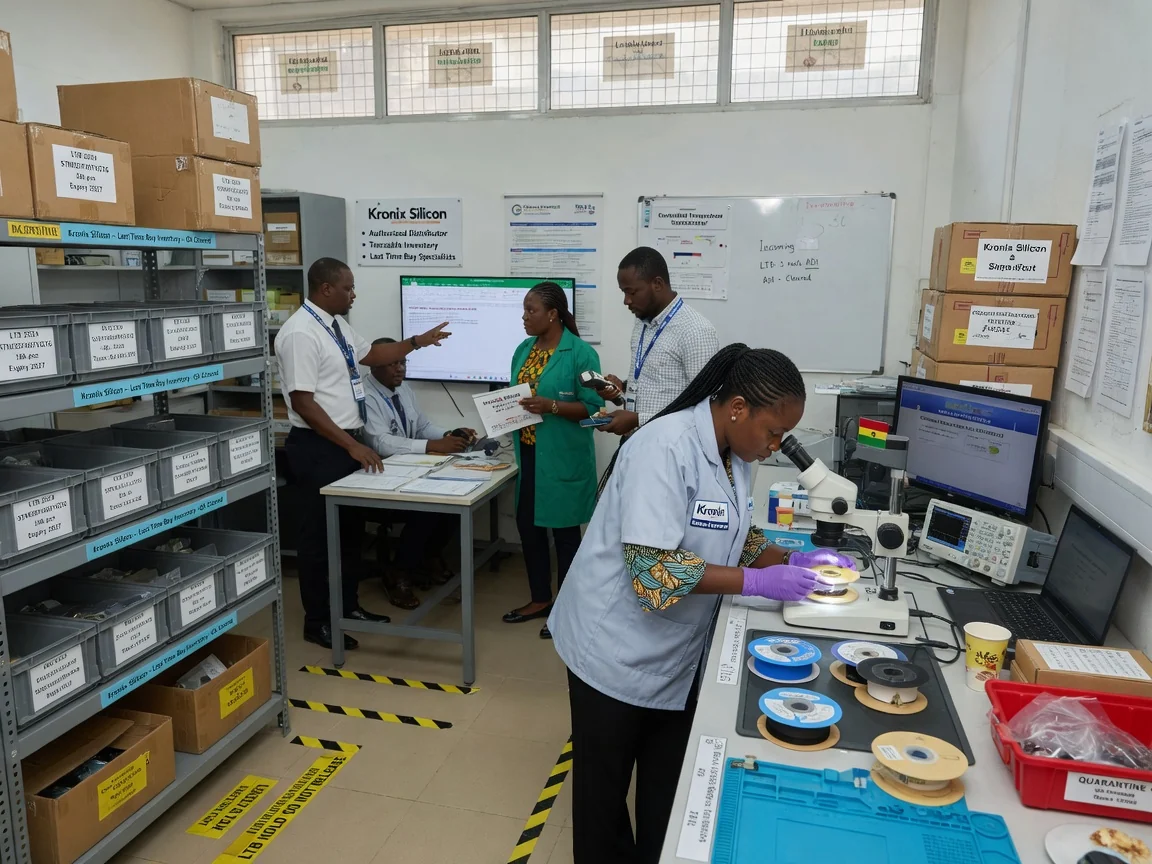
Last-Time-Buy Advisory — Where manufacturer discontinuation windows are open, clients receive structured advisory on managed buy quantities calibrated to their operational horizon, with full documentation of part provenance and storage specifications.
-
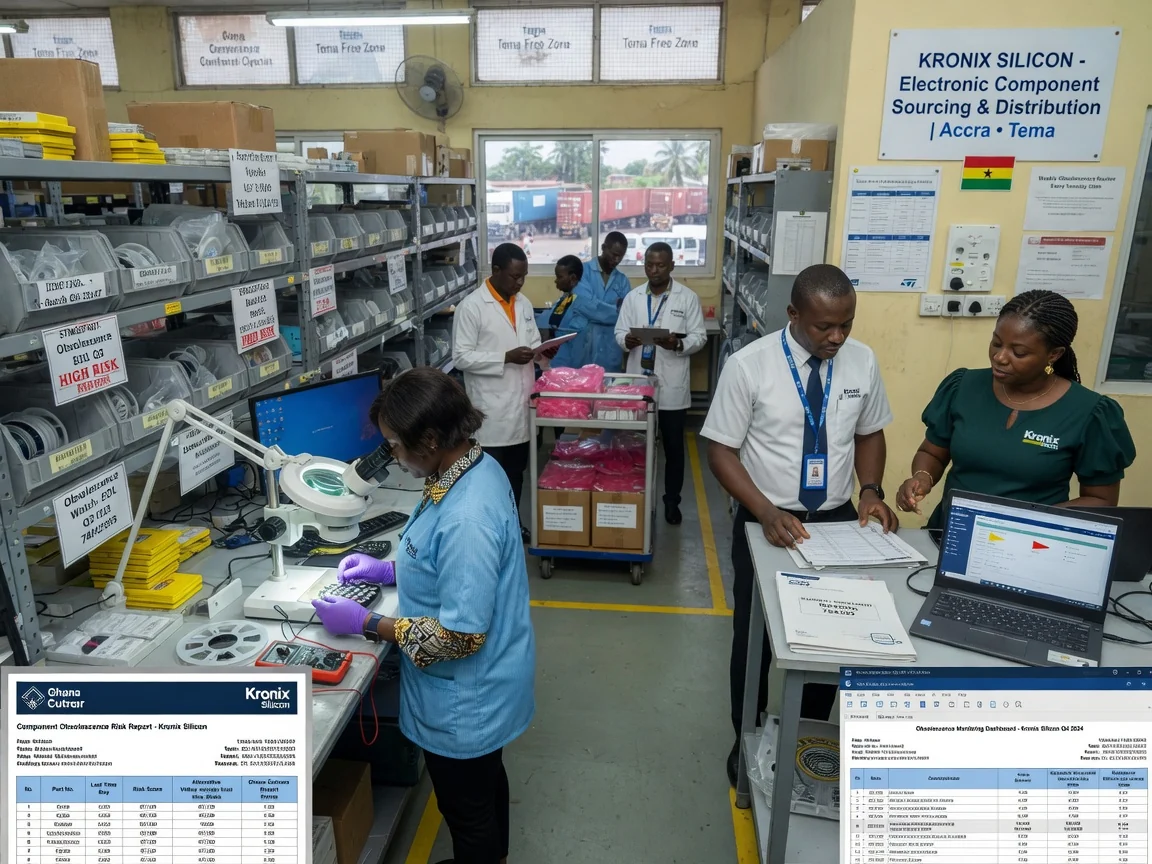
Ongoing Monitoring and Reporting — The programme is not a one-time audit. Clients receive structured periodic reporting on lifecycle status changes across their component landscape, maintaining institutional awareness of emerging obsolescence risk before it becomes a procurement emergency.
Documentation & Traceability Standards
- Full chain-of-custody documentation from manufacturer lifecycle data through to client delivery records
- Cross-referenced part number verification against original manufacturer lifecycle status classifications
- Alternative component proposals accompanied by technical compatibility documentation for client engineering review
- Segregated storage and handling protocols for managed last-time-buy inventory
- Handover packages that meet institutional procurement audit requirements across Ghana and Togo
Outcomes for Institutional Buyers
Clients who operate a structured obsolescence management programme with Kronix Silicon maintain operational continuity on long-lifecycle systems without the cost and disruption of reactive emergency sourcing. Procurement teams gain documented foresight — lifecycle intelligence converted into procurement action at the right time, at the right scale, with full traceability at every handover. The result is an institutional supply posture that absorbs component lifecycle risk rather than being governed by it.
Related Sectors and Solutions
Obsolescence management integrates directly with Kronix Silicon’s broader sourcing and supply-chain disciplines. Clients managing complex component landscapes across Ghana and Togo will find this service most powerful when combined with structured Component Sourcing and Supply-Chain Management programmes — establishing a complete lifecycle-aware procurement function rather than addressing sourcing and obsolescence as separate concerns.
Related Services
- Electronic Component Sourcing & Distribution — Africa — genuine, traceable parts across Africa
- Supply Chain Management — end-to-end continuity programmes
- Inventory & Stocking Programmes — buffer stock for last-time-buys
- Traceability & Compliance — documented provenance for managed inventory
- Technical Sourcing Advisory — form-fit-function alternative guidance
Genuine & To Standard
- We source last-time-buy and legacy parts from authorised and traceable supply lines with anti-counterfeit discipline aligned to recognised practice (AS6081 / AS9120 where applicable) and ISO 9001 quality practice — and we describe only the accreditations and authorised lines we actually hold
- Traceability and provenance documentation accompanies every managed buy, with segregated storage for inventory acquired in anticipation
- Established 1998 — a real component-sourcing and supply-chain partner, not a fabrication plant — serving Ghana, markets across Africa, and the Ghana–Togo (Lomé) corridor