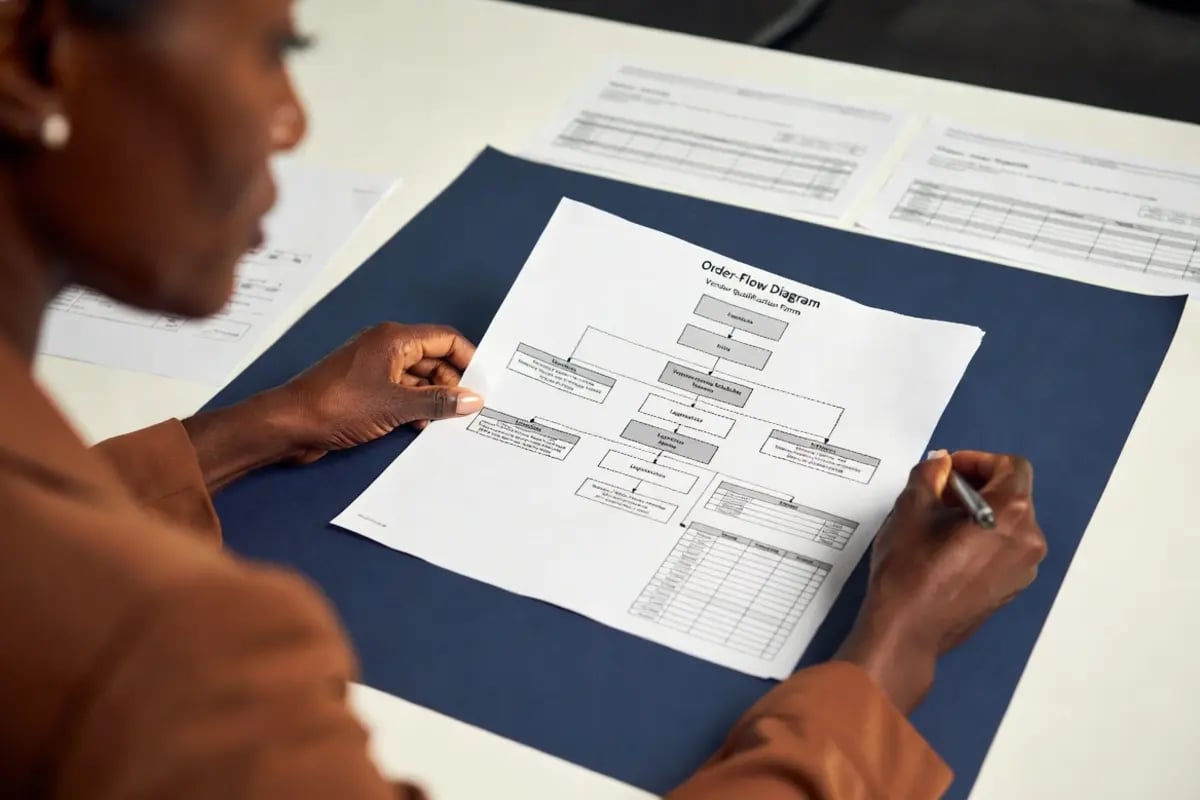
Supply Chain Management
End-to-end supply chain management for electronic components — from vendor qualification and order management to inbound logistics and inventory coordination — structured around continuity of supply.
Supply chain management for electronic components is a continuity function, not a purchasing one — a single untracked substitution or mis-documented batch can halt a production line or delay a network rollout. (To be clear: Kronix Silicon is a sourcing and supply-chain partner, not a semiconductor fab.) We orchestrate vendor-to-facility supply as one governed workflow for institutional buyers, and have done since 1998. Request a sourcing quote — or discuss a supply programme: +233 20 531 3333.
What Is Supply Chain Management?
Supply chain management, in the context of institutional electronic-component procurement, is the disciplined orchestration of every process that moves a component from qualified vendor to operational facility — without gap, ambiguity, or undocumented handover. It encompasses vendor qualification, order placement, inbound logistics coordination, inventory positioning, and delivery verification, structured as a single governed workflow rather than a collection of disconnected transactions.
Institutions that specify this service — electronics manufacturers, telecoms operators, industrial automation integrators, energy-system developers, and government technical departments operating across Ghana and Togo — do so because component supply is not a purchasing function. It is a continuity function. A single untracked substitution, a mis-documented batch, or a logistics break can halt a production line, delay a network rollout, or compromise a critical energy installation. Structured supply chain management eliminates those failure modes by design.
When to Specify Supply Chain Management
This service is indicated wherever the cost of supply disruption exceeds the cost of process discipline — which, for institutional operations, is almost always. Electronics manufacturers managing multi-line production schedules, telecoms operators expanding network infrastructure across the Ghana–Togo corridor, and industrial automation clients integrating time-sensitive control systems all operate under conditions where component availability directly determines operational continuity.
It is equally relevant for government technical procurement offices and energy-system developers whose procurement cycles are subject to audit, traceability requirements, and multi-agency oversight. When every component movement must be documented, reconciled, and defensible at review, ad-hoc sourcing arrangements are not adequate. A managed supply chain is.
Methodology — The Kronix Silicon Specialist Approach
-
Vendor Qualification and Panel Management — Each supply source is evaluated against a defined qualification framework covering provenance documentation, anti-counterfeiting protocols, and delivery reliability. Only vendors that meet the institutional threshold are admitted to the active panel.
-
Requirement Scoping and Order Specification — Client technical requirements are translated into precise order specifications — part numbers, tolerance grades, batch conditions, and documentation requirements — before any order is placed. Ambiguity at this stage is resolved, not deferred.
-
Order Placement and Confirmation Tracking — Orders are placed with full confirmation loops. Lead times, partial-shipment conditions, and substitution policies are governed by written terms, not verbal understanding.
-
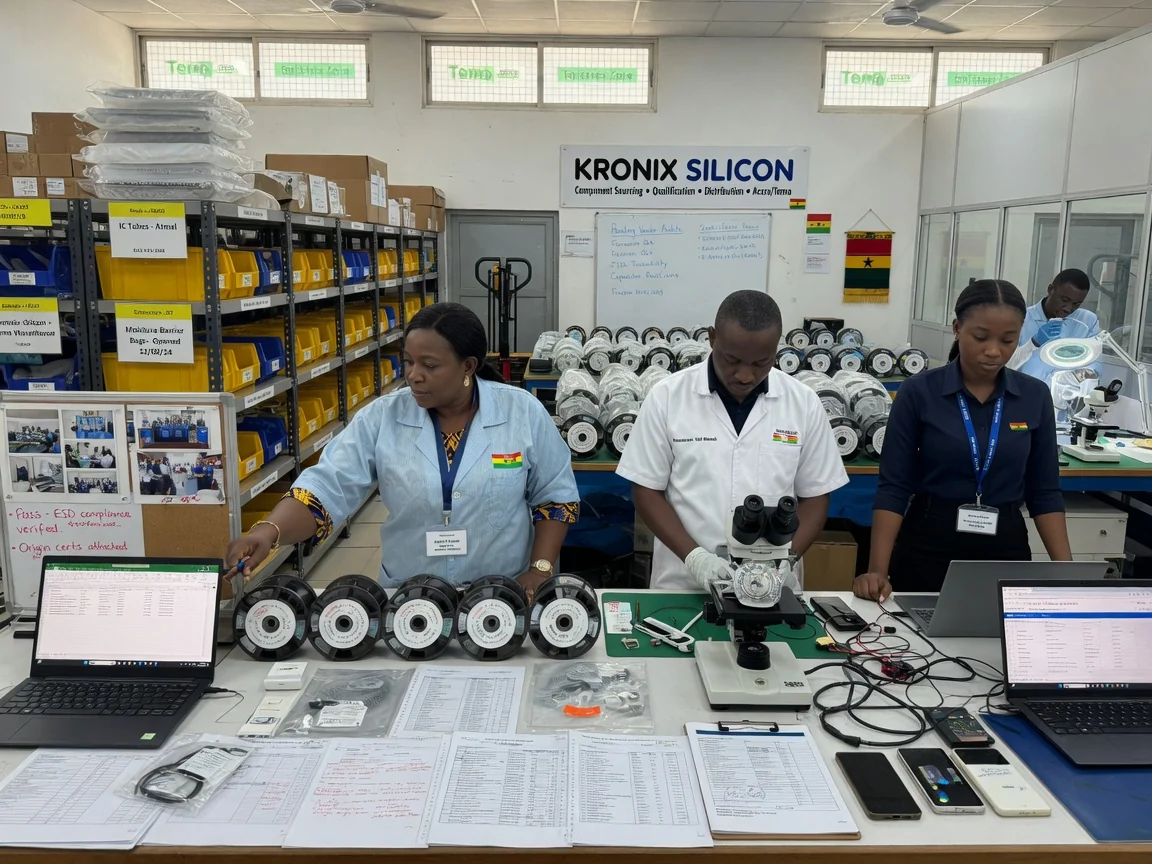
Inbound Logistics Coordination — Inbound shipments are tracked from origin to Ghana or Togo receiving point. Every handover is documented. No component enters client inventory without a verified delivery record.
-
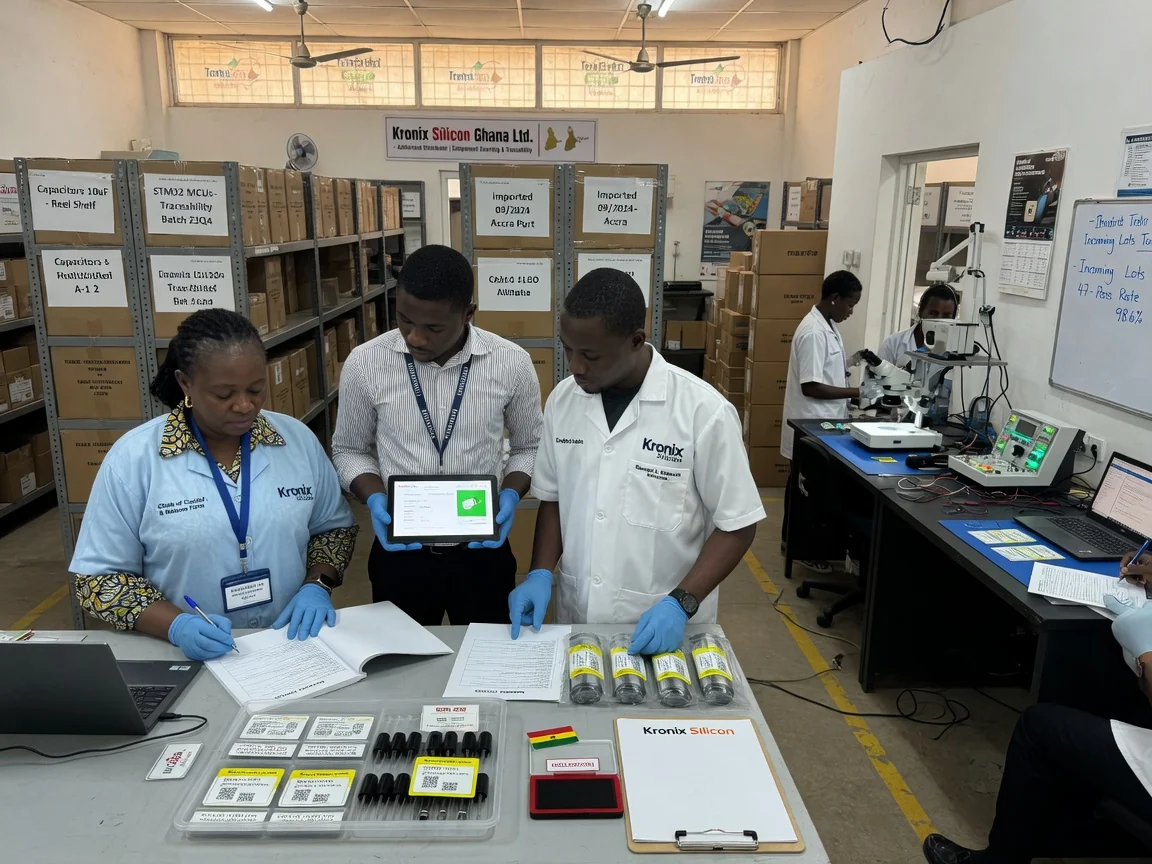
Inventory Coordination and Handover Sign-Off — Components are received, batch-verified against order specifications, and formally transferred to client operational custody with documented sign-off. The chain of custody is complete and auditable from vendor qualification to final handover.

Process Standards & Documentation Discipline
- Vendor qualification against a structured provenance and reliability framework
- Written order specifications with defined tolerance, documentation, and substitution conditions
- Confirmation-loop order management with lead-time and partial-shipment governance
- End-to-end inbound logistics tracking with documented handover records at each stage
- Batch verification against original order specifications at point of receipt
- Full chain-of-custody documentation, auditable from vendor panel to client delivery
Outcomes & Service Continuity
Clients operating under a managed supply chain engagement receive component supply that is traceable, documented, and governed at every stage. Production schedules, network rollout timelines, and project commissioning dates are protected by the structural discipline of the supply process — not by reactive expediting when things go wrong. The outcome is institutional confidence: the component on the production floor is the component that was specified, sourced from a qualified vendor, and received through a documented chain.
Kronix Silicon structures engagements to sustain this discipline across recurring procurement cycles, not as a one-time exercise. Continuity of supply is the service.
Related Sectors and Solutions
Kronix Silicon’s supply chain management service supports the full range of institutional sectors it serves across Ghana and Togo. Relevant adjacent services include Electronic Component Sourcing, Vendor Qualification, and Distribution and Logistics Coordination. Clients in telecoms infrastructure, industrial automation, and government technical operations will find each of these disciplines interconnected within a single institutional supply relationship.
Related Services
- Electronic Component Sourcing & Distribution — Africa — genuine, traceable parts across Africa
- Logistics & Import Coordination — customs and inbound delivery
- Inventory & Stocking Programmes — buffer stock and positioning
- Traceability & Compliance — documented chain of custody
- Obsolescence Management — lifecycle-aware continuity
Genuine & To Standard
- Vendors are qualified against a structured provenance and reliability framework, and we source from authorised and traceable supply lines with anti-counterfeit discipline aligned to recognised practice (AS6081 / AS9120 where applicable) and ISO 9001 quality practice — describing only the accreditations and authorised lines we actually hold
- Full chain-of-custody documentation, auditable from vendor panel to client delivery, accompanies every supply
- Established 1998 — a real component-sourcing and supply-chain partner, not a fabrication plant — serving Ghana, markets across Africa, and the Ghana–Togo (Lomé) corridor