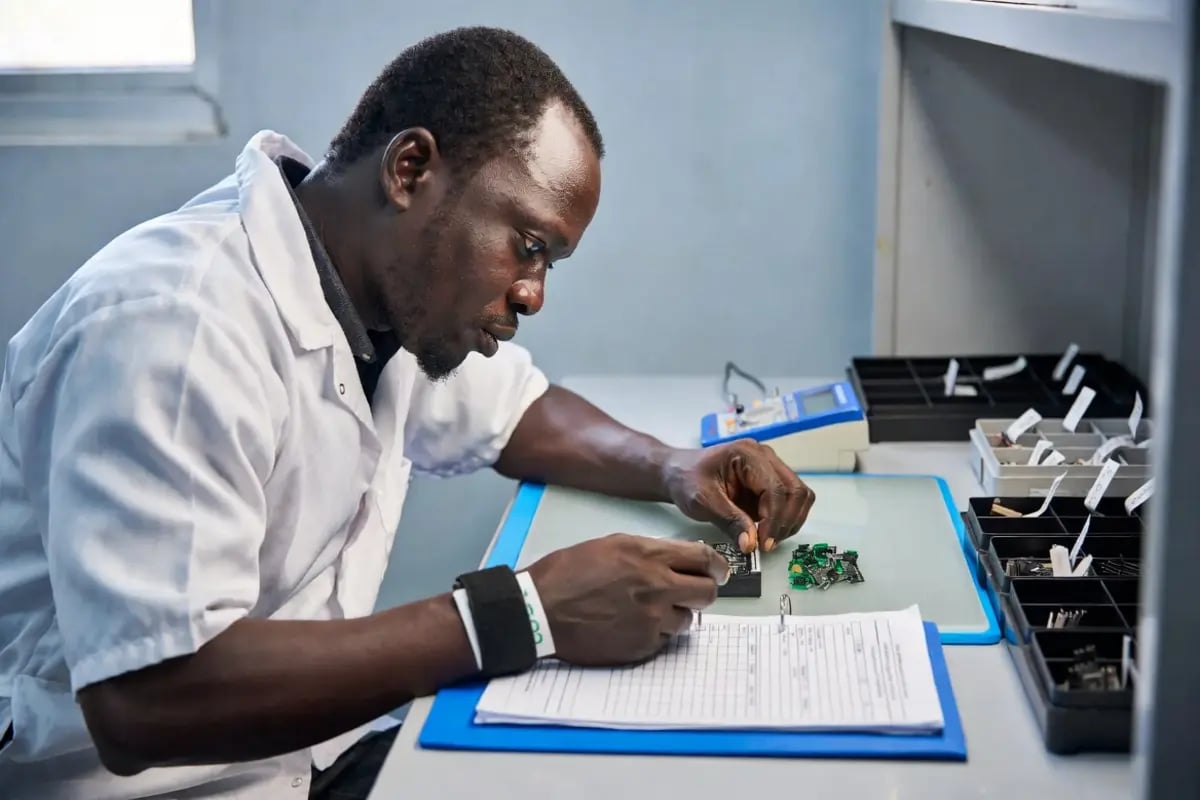
Quality Assurance & Testing Coordination
Incoming-inspection coordination, counterfeit-screening discipline and testing protocols for electronic components, with full documentation at each acceptance point.
What is Quality Assurance & Testing Coordination?
Quality Assurance and Testing Coordination is the structured discipline through which every electronic component entering an institutional supply chain is verified, screened, and documented before it reaches the production line, telecoms rack, or industrial control panel. It encompasses incoming-inspection protocols, counterfeit-screening procedures, and component-level testing coordination — each governed by a defined acceptance framework and captured in auditable records at every handover point.
Institutions that cannot afford a line stoppage, a field failure, or a regulatory non-conformance specify this service as a foundational layer of their procurement process. Electronics manufacturers assembling mission-critical boards, telecoms operators deploying infrastructure, energy systems integrators commissioning control hardware, and government agencies procuring industrial electronics across Ghana and Togo all depend on this discipline to hold the integrity of their component pipeline from source to acceptance.
When to Specify Quality Assurance & Testing Coordination
Specify this service whenever the consequence of a non-conforming component reaching assembly is measured in operational downtime, safety risk, or contractual liability. The sectors that benefit most are those where field replacement is costly, where counterfeit proliferation is well-documented in the sourcing corridor, and where procurement audit trails are a compliance obligation rather than a courtesy.
In practice, this means electronics manufacturing operations running scheduled production cycles, industrial automation facilities with uninterrupted-process mandates, telecoms roll-outs handling volume passive and active components, and government infrastructure projects where public-procurement documentation requirements demand traceability at every stage. Across Ghana and Togo, where multi-tier distribution introduces additional provenance variables, independent testing coordination is not a supplemental option — it is the specification standard.
Methodology — The Kronix Silicon Specialist Approach
-
Acceptance Criteria Definition. Working with the client’s engineering and procurement leads, the team establishes component-specific acceptance criteria — electrical parameters, physical tolerances, marking conventions, and traceability requirements — before any inbound consignment is received.
-
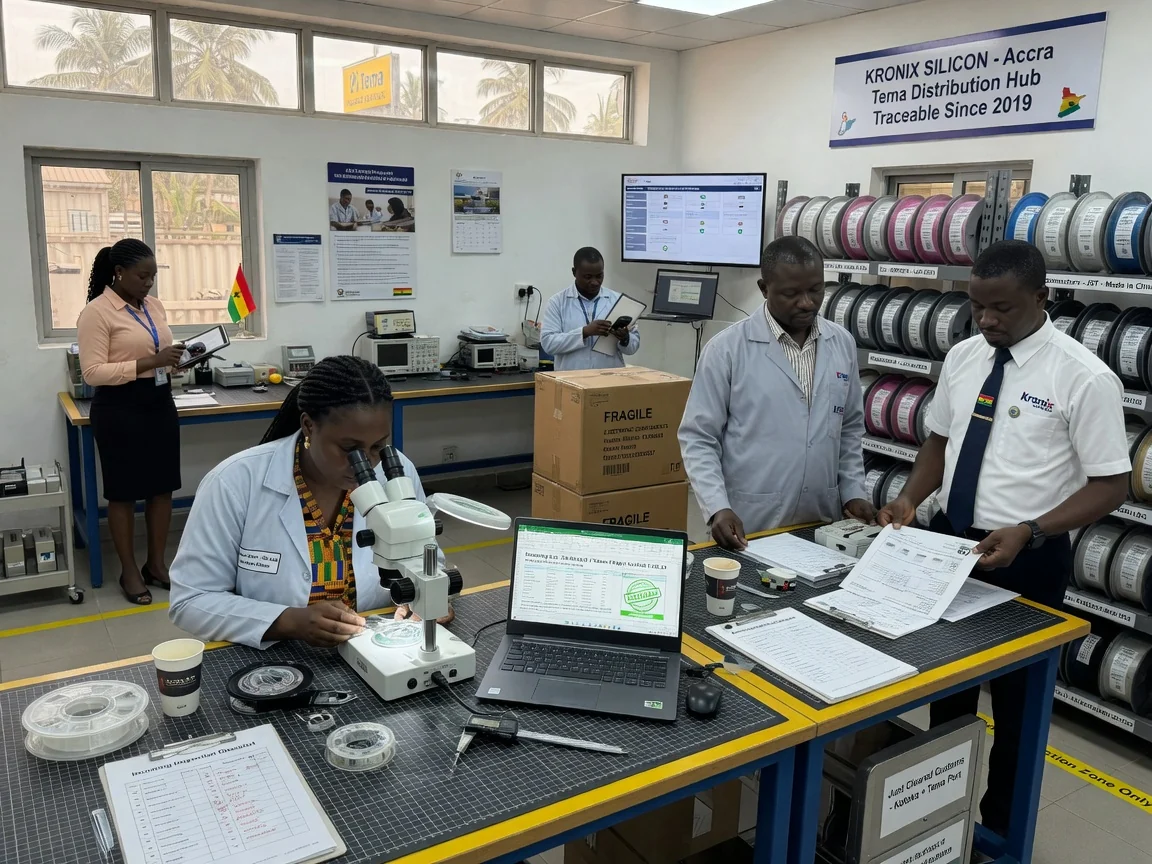
Incoming Inspection & Documentation. Every consignment is logged at receipt. A structured incoming-inspection process records quantity, packaging integrity, date codes, manufacturer lot references, and visual-conformance checks against specification. Nothing is released into inventory without a completed inspection record.
-
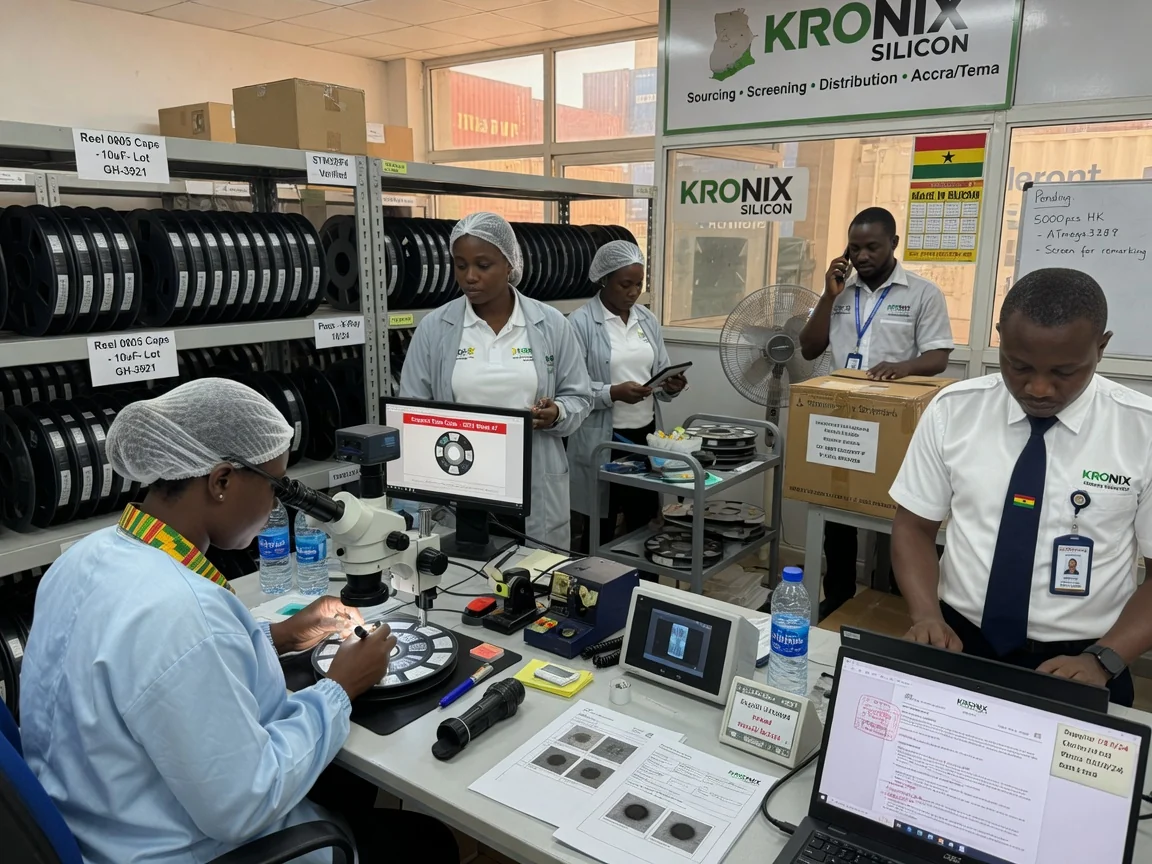
Counterfeit Screening Coordination. Components assessed as higher-risk — given part type, sourcing tier, or procurement corridor — are routed through coordinated counterfeit-screening procedures. This includes marking-authenticity review, dimensional verification, and, where warranted, coordination with specialist testing facilities.
-
Testing Coordination & Results Capture. Where electrical or parametric testing is required, Kronix Silicon coordinates the testing workflow, manages sample routing, and receives and files test reports against the corresponding consignment record. Clients receive consolidated documentation packages rather than fragmented test outputs.
-
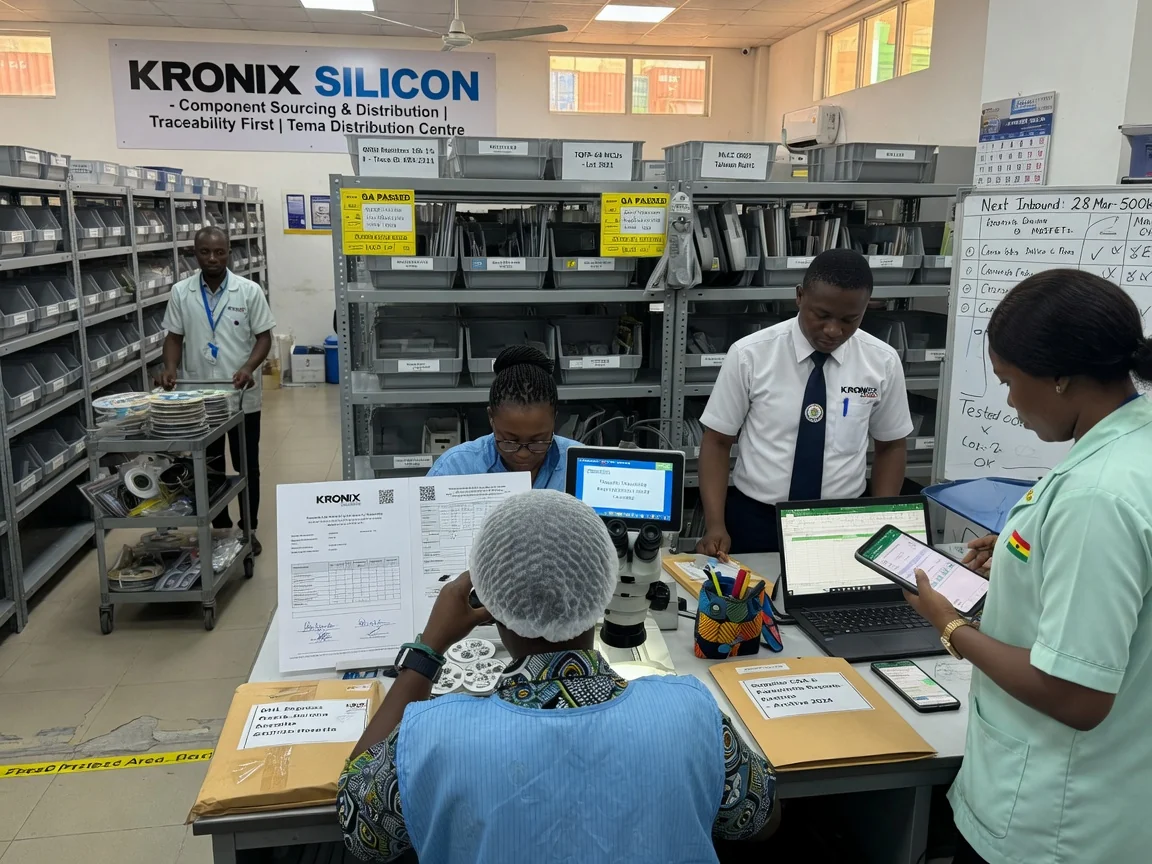
Acceptance Sign-Off & Handover Record. Each consignment is formally accepted or quarantined based on inspection and testing outcomes. A complete handover record — including inspection findings, test results, and disposition status — accompanies the components into the client’s inventory or flags the hold for resolution.
Process Standards & Documentation Discipline
- Structured acceptance criteria established per component family before receipt
- Incoming inspection records capturing lot reference, date code, and visual conformance
- Counterfeit-screening protocols applied to risk-categorised component types
- Coordinated test-results filing with consolidated client documentation packages
- Quarantine and disposition management for non-conforming consignments
- Full chain-of-custody documentation maintained from receipt through acceptance
Outcomes for Institutional Procurement Operations
Clients who specify Quality Assurance and Testing Coordination receive a component pipeline with documented provenance, reduced counterfeit exposure, and audit-ready records at every acceptance point. Production operations experience fewer line-hold events arising from non-conforming components. Procurement and quality teams carry documentation that satisfies internal governance, client audits, and public-procurement compliance requirements without retrospective reconstruction.
The outcome is not simply tested components — it is a defensible, traceable procurement record that institutional operations can stand behind.
Related Sectors and Solutions
- Electronics Manufacturing — production-ready component supply with acceptance documentation
- Telecoms Infrastructure — passive and active component screening for roll-out programmes
- Industrial Automation — control-system component verification across Ghana and Togo
- Energy Systems — sourcing and inspection coordination for power-electronics procurement
- Government & Public Procurement — traceability-disciplined supply aligned to audit requirements
Genuine & To Standard
- Components are sourced from authorised and traceable supply lines with anti-counterfeit discipline aligned to recognised practice (AS6081 / AS9120 where applicable) and ISO 9001 quality practice — and we describe only the accreditations and authorised lines we actually hold
- Traceability and acceptance documentation with every consignment, so your QA can verify provenance from receipt through sign-off
- To be clear: Kronix Silicon is a sourcing and distribution partner — not a semiconductor fab. We coordinate inspection, screening, and testing; we do not fabricate or test wafers in-house. Established 1998.
Component Quality Assurance Across Ghana & Togo
We coordinate incoming inspection, counterfeit screening, and testing for electronics manufacturers, telecoms operators, industrial automation integrators, energy-systems builders, and government procurement offices across Accra, Tema, and Kumasi, and into Lomé and across Togo along the Ghana–Togo corridor. Documented provenance, screened parts, audit-ready records.
Related Services
- Electronic Component Sourcing — specification-grade sourcing
- Traceability & Compliance — documented provenance
- Obsolescence Management — last-time-buy & lifecycle
- Supply Chain Management — end-to-end programmes